
Announcements
Microsoft 365 Copilot Roadmap: What's New & Available
When: Tuesday, August 25, 2026, 9:00 – 10:00 AM (PDT)
Keep up with the latest in Microsoft 365 Copilot, all in one place. This Roadmap webinar
series is your central hub for the latest Copilot innovations. Each session covers
what’s new, what’s next, and how it all comes together to drive impact across your
organization.
Join Microsoft experts for a clear, practical view of Copilot so you can act on what’s
available today and plan for what’s ahead.
Get ready to:
- Explore the latest Microsoft 365 Copilot capabilities available today
- Gain early insight into what’s coming next so you can plan with confidence
- See real-world examples of how organizations are putting Copilot to work across roles, workflows, and business scenarios
- Identify practical next steps to get started or deepen Copilot adoption
RSVP Now! https://aka.ms/MTC/CopilotRoadmapEvent
Anthropic Claude Opus 5 in Microsoft 365 Copilot
Claude Opus 5 is the newest model in Anthropic’s Opus family. Designed to be used every day for complex, multi-step work. It improves on Opus 4.8 across agentic coding, professional knowledge work, and long-horizon reasoning.
With Opus 5, Copilot takes on more of the steps between idea and finished work across the apps you use every day—while keeping you in control of the final outcome:
- Word: Move from rough idea to a complete draft, holding structure and flow together across longer documents.
- Excel: Work through complex analysis with higher-quality modeling and more polished workbooks.
- PowerPoint: Build and refine presentation drafts from first outline to polished deck, with more visual polish, creative layouts, and better use of slide space
- Copilot Chat: Tackle open-ended, novel problems—comparing options, structuring plans, working through ambiguity—with stronger reasoning.
- Copilot Cowork: Stay focused on long-running tasks, orchestrating work across tools and files with the context Work IQ brings from your organization to carry a project through start to finish.
- Copilot Studio: Build agents on Claude Opus 5 for advanced reasoning, workflow automation, and multi-step tool use in the preview orchestrator.
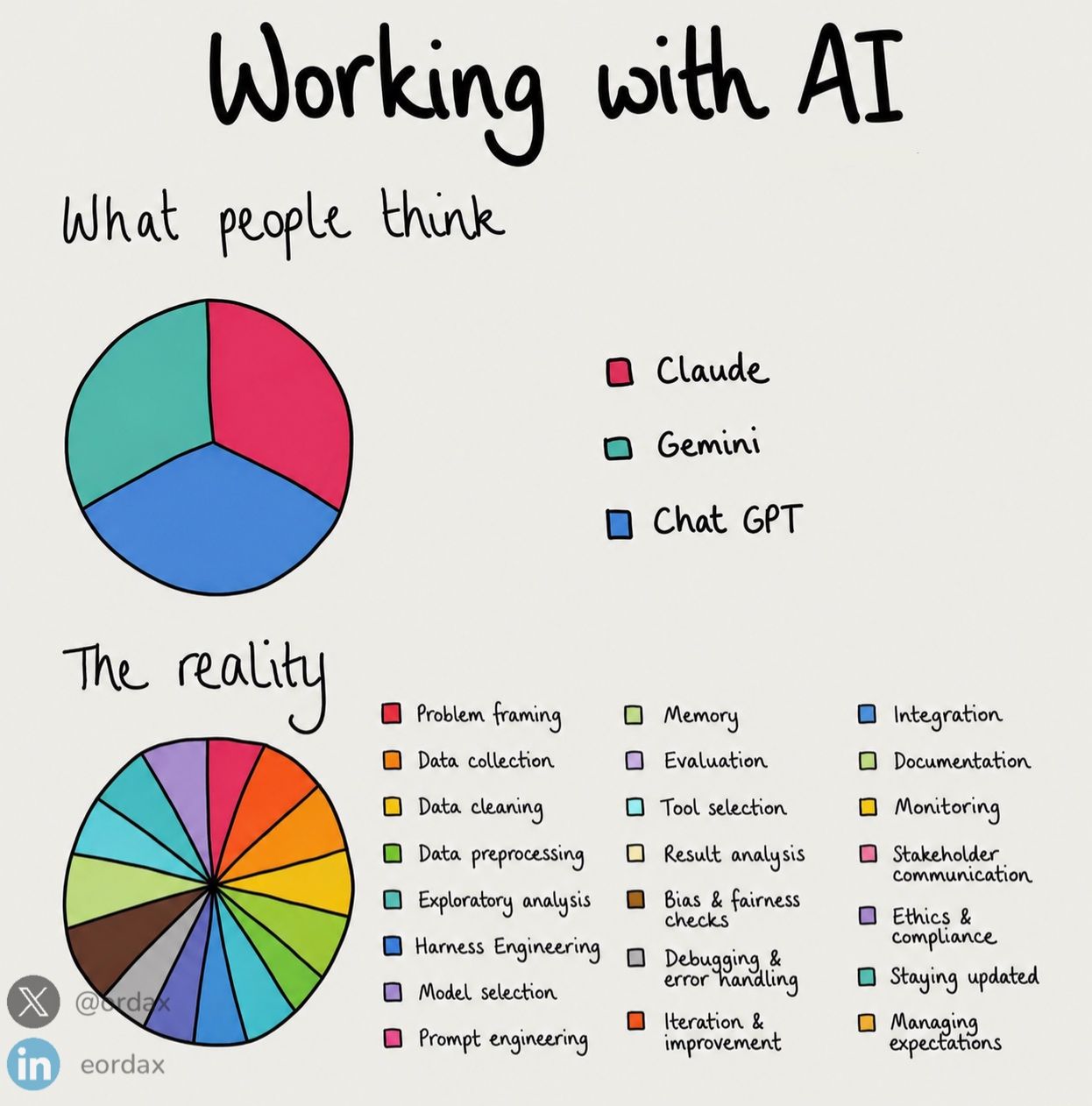
Join the Linkedin Working with AI Conversation!
Join the Linkedin Working with AI Conversation!
8 New Features in Microsoft 365 Copilot You Need to Try (August 2026)
A step-by-step tutorial video showing 8 Microsoft Copilot new features for August 2026. See the latest OpenAI and Anthropic models, Word/Excel/PowerPoint agents inside Copilot Chat, Cowork integration, major Copilot Notebooks updates, Suggested Edits in Copilot Pages, and the updated Copilot Prompt Library. If you use Microsoft 365 Copilot for work or education, these are some of the biggest new features to know.
UTK OIT Matrix Chart
Visit the UTK OIT Artificial Intelligence webpage to view the matrix chart that reveals where UT users may input university data using AI tools based on UT’s data classification. Guidance Chart for Using AI Tools | Office of Innovative Technologies
Copilot in PowerPoint Live
Now in PowerPoint Live, attendees can select slide text during a meeting and ask Copilot to explain the content. This helps participants quickly get clarity on unfamiliar terms, complex ideas, or slide details without interrupting the presenter. For organizations, it makes live presentations more accessible, informative, and easier to follow. This feature is rolling out in June.
Copilot Health
Microsoft AI debuted Copilot Health, a new AI experience that uses your health records, wearable data, and medical history to give personalized insights — moving toward what CEO Mustafa Suleyman describes as “medical superintelligence.”
Here are the details:
- Sitting as a secure space within Copilot, the new offering connects to 50+ wearables, EHR records from 50K+ U.S. hospitals, and Function lab results.
- The AI analyzes this data and gives personalized insights to help people make sense of their health and get the most out of their doctors’ consultations.
- Microsoft says Copilot Health’s advice is grounded in information from credible organizations such as Harvard Health, with answers linking back to the sources.
- The data connected to the platform is not used for training, and users retain the option to disconnect data sources and delete the linked data altogether.
Copilot Cowork
Copilot Cowork is the centerpiece of what Microsoft is calling "Wave 3" of Microsoft 365 Copilot — a sweeping platform update that also brings agentic capabilities directly into individual Office apps, makes Anthropic's Claude models available in mainline Copilot Chat, and introduces new enterprise pricing tiers designed to bundle AI productivity with security and governance.
Introducing MAI-Image-2
MAI-Image-2 is built for creatives who want images that feel like they exist in the world, with natural light, accurate skin tones, environments that feel lived-in.
Microsoft Pits Claude Against ChatGPT for Research
Microsoft released Critique and Council, two new features that turn its Copilot Researcher into a multi-model system that can review and edit research reports and run both systems side by side to see where they agree and disagree.
Here are the details:
- Copilot's Researcher already uses OAI for multi-step work, with Critique now adding Claude as a second model to review every report before it ships.
- One model drafts the research, and the second tears it apart on source quality, completeness, and evidence grounding behind the scenes.
- A separate Model Council mode runs both models side by side, then flags where they agree, where they split, and what each uniquely surfaced.
- The updates come alongside a broader rollout of Copilot Cowork into Frontier, Microsoft's Claude-based agentic tool for handling multi-step tasks
Microsoft AI Turns Tissue Samples into Cancer Maps
Microsoft released GigaTIME, a new open-source AI model that can extract thousands of dollars worth of tumor insights from a basic $10 tissue slide. Cancer research is entering a new phase where AI can provide meaningful insights from routine data that would have required costly, time-intensive lab work just a few years ago.
AI-generated population-scale is changing how we study cancer
Using AI-generated virtual populations, Microsoft researchers uncovered hidden cellular patterns that could reshape how we understand and treat cancer.
Google DeepMind AlphaGenome
Google DeepMind just published the full research paper and model weights for AlphaGenome, its AI tool unveiled this summer that scans a million letters of genetic code to predict how mutations cause disease. AlphaGenome was trained on vast genetic datasets and can predict how a single DNA typo affects 11 different biological processes. It gives researchers open access to a map for the genetic code that could ramp discovery in ways we're only beginning to imagine. In tests, it flagged mutations linked to leukemia that sat thousands of letters away from the affected gene, connections that took researchers years to find.
Microsoft Azure Hackathon: Activate Generative AI with Azure
Experience hands-on labs, real-world scenarios, and expert guidance from Microsoft and NVIDIA.
You’ll discover:
- How to use large language models (LLMs) and Azure OpenAI Service accelerated by NVIDIA GPUs
- Best practices for developing and deploying generative AI apps at scale
- Tips for automating workflows and tracking performance
ChatGPT Health
OpenAI just introduced ChatGPT Health, a new private experience within the chatbot that lets users pull in their medical records and fitness app data to allow health conversations — drawing on personal context instead of generic advice.
Microsoft Copilot Usage Report
New research from Microsoft analyzing 37.5M Copilot conversations from the past year, revealing distinct behavioral patterns in how users engage with the AI assistant across different devices, time periods, and topics.
Here are some of the highlights:
- Health and wellness queries dominated mobile use regardless of hour or month, positioning phones as around-the-clock personal wellness companions.
- Advice-seeking grew throughout the year, with users increasingly treating AI as a guidance source rather than just a pure search tool.
- Late-night sessions saw philosophical, religious, and existential topics climb in popularity, while relationship chats spiked specifically around Valentine's Day.
- Programming dominated in January, while social topics rose later in the year, reflecting a shift from early adopters toward a broader, mainstream audience.