
Respiratory Fit Testing and Training
Respiratory Protection
To ensure employee health, safety, and compliance with state law, personnel wearing a respirator must complete the below three-step process prior to wearing a respirator.
1. Medical Evaluation
Complete the Medical Evaluation Questionnaire and submit to Occupational Health for approval to wear a respirator. This ensures that you are physically capable of wearing a respirator without a risk to your health.
2. Training
Complete respirator training on Blackboard or as directed by your supervisor (REQUIRED ANNUALLY). This training informs you about the UTHSC Respiratory Protection Program and how to use your respirator.
3. Fit Testing
Email labsafety@uthsc.edu to schedule a fit test (REQUIRED ANNUALLY). Confirm your respirator fits properly. PAPR users do not require fit testing.
At UT Health Sciences, the people most commonly required to use respirators are:
- Medical students
- Medical residents
- Postdoctoral researchers
- Scientific researchers
- Hazardous materials spill response
- UTHSC Facilities skilled tradesmen
Engineering controls such as fume hoods and biosafety cabinets are always the preferred means of protection. When they aren't feasible or are still being implemented, a respirator may be required.
A respirator is required when there is potential exposure to:
- Airborne infectious agents (e.g., tuberculosis, influenza, SARS) from patients
- Hazardous chemicals or infectious biological agents in laboratory research
- Anesthetic gases during animal surgical procedures
- Hazardous chemicals in engineering, maintenance, or custodial operations
- Fumes from melting, grinding, or welding metals
- When working with hazardous materials, researchers must apply the hierarchy of controls to mitigate risk.
Tennessee OSHA requirements for respirator use:
- Medical clearance
- Annual training
- Annual fit testing for tight-fitting respirators (N-95, half-face, and full-face)Note: PAPRs (Powered Air-Purifying Respirators) are exempt from fit testing but still require medical clearance and annual training.
Voluntary respirator use: Employees who choose to wear a respirator when not required must follow OSHA's voluntary use provisions, available on the OSHA website.
First Things First! Obtain Medical Approval from University Health Services
Employees wearing a respirator must complete a medical evaluation questionnaire to be reviewed by Occupational Health. This evaluation ensures you are physically capable of safely wearing a respirator.
Complete a Medical Questionnaire for Respirator Users and contact University Health Services to arrange an appointment to be evaluated. A $25/person fee will be charged to the department or college requiring the medical questionnaire review.
If you've received previous medical approval, an additional medical evaluation may be necessary if:
- The Occupational Health Nurse recommends it
- There is a change in your medical status
- There is a change in workplace conditions that may increase the physiological burden placed on you.
Next Step Before Respirator Fit Testing: Complete Respiratory Protection Training
Annual training is available via UTHSC BlackBoard. Select the training module that matches the type of respirator you will be wearing (N95 Disposable Respirators, half-face or full-face negative pressure respirators, or Powered Air-Purifying Respirators (PAPRs). In the “Courses” tab, enter the respirator into the search bar to see this list of Research Safety Affairs training modules.
A score of 80% must be obtained. For specialized, hands on training, please email labsafety@uthsc.edu.
Now You Are Ready! Get Fit Tested
Annual fit-testing is required before wearing either an N95, half-face or full-face respirator (fit-testing is not required for a PAPR). To schedule a fit test, email labsafety@uthsc.edu.
Bring your purchased respirator to the fit test session. Not all respirators provide the same protection. Different hazards require different types, models, and fits. For help selecting the right respirator for your specific work, email labsafety@uthsc.edu .
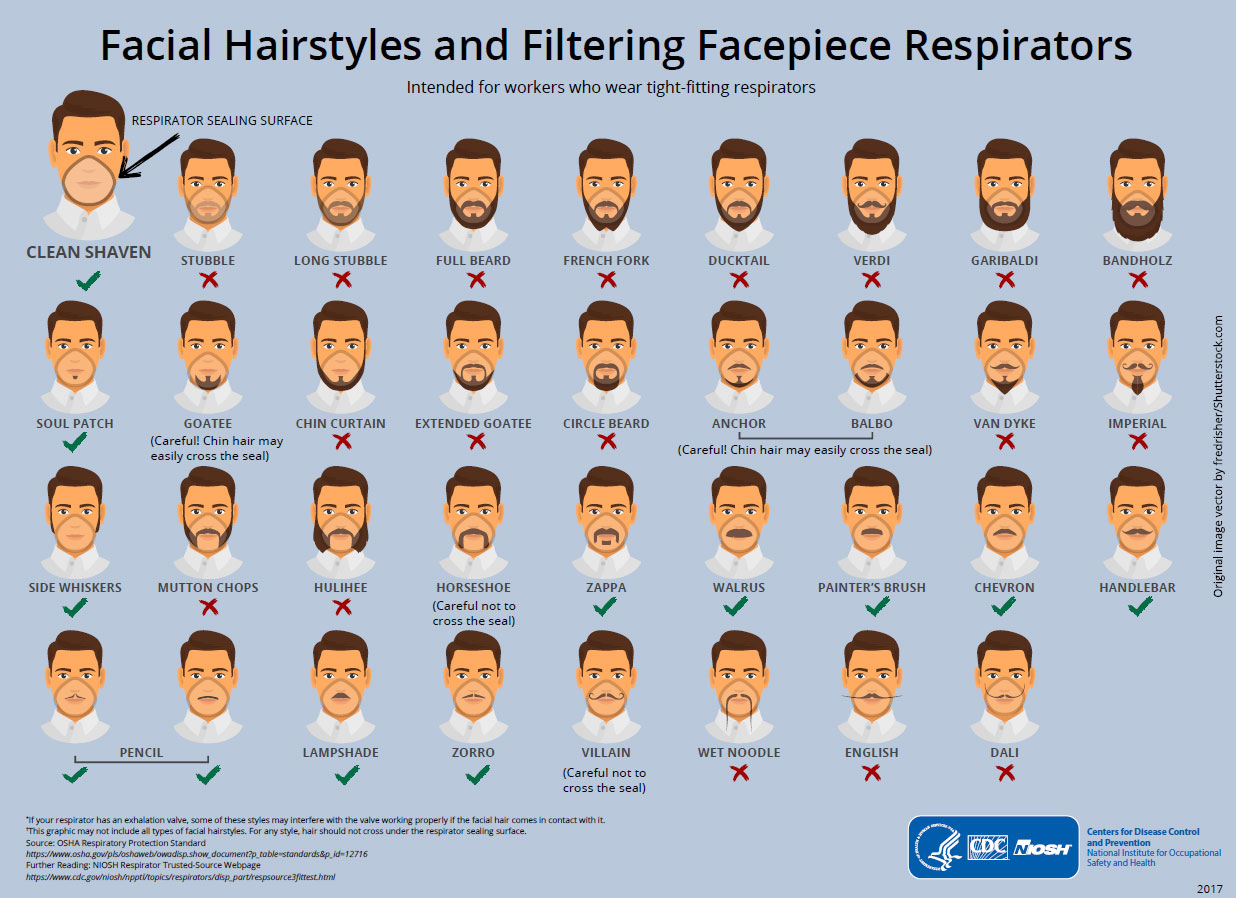
Tight-fitting respirators require a complete face seal — facial hair in the seal area will compromise protection and disqualify you from fit testing. See this NIOSH graphic for acceptable facial hair styles.
For more information, see the Respiratory Protection Plan or email labsafety@uthsc.edu.