
MPOWER Mentorship Program
Build Connections. Find Guidance. Grow as a Physician.
At the University of Tennessee Health Sciences College of Medicine, the MPOWER Mentorship Program creates meaningful connections between students, faculty, and peers throughout medical school.
Through small-group activities, faculty mentorship, peer support, and community-building events, MPOWER helps students navigate the challenges and opportunities of medical education while developing the professional relationships that support lifelong success.
MPOWER stands for:
- Mentoring
- Professionalism
- Opportunity
- Wellness
- Excellence
- Research
Why MPOWER?
Medical school is about more than academics. MPOWER helps students:
- Connect with faculty mentors outside the classroom
- Build relationships across all four years of medical school
- Explore career pathways and specialty interests
- Gain professional guidance and support
- Develop leadership and networking skills
- Foster wellness, belonging, and community
How the Program Works
Every medical student is assigned to an MPOWER House and placed into a small mentorship group that includes:
- Faculty mentors
- Peer mentors
- Students from multiple class years
Throughout the year, groups participate in a variety of activities designed to encourage connection, mentorship, and personal growth.
Program Highlights
- 3-4 group events each year
- Small-group discussions and networking opportunities
- Individual faculty mentor check-ins
- Peer mentoring and advice from upper-class students
- Community and wellness activities
What Students Can Expect
Faculty Mentorship
Faculty mentors provide:
- Professional guidance
- Career exploration support
- Advice on navigating medical school
- Opportunities to discuss goals and interests
Students also have the opportunity to participate in one-on-one meetings with faculty mentors during the academic year.
Peer Support
Upper-class student mentors help newer students:
- Adjust to medical school
- Share study and success strategies
- Learn about campus resources
- Build connections across class years
MPOWER Houses
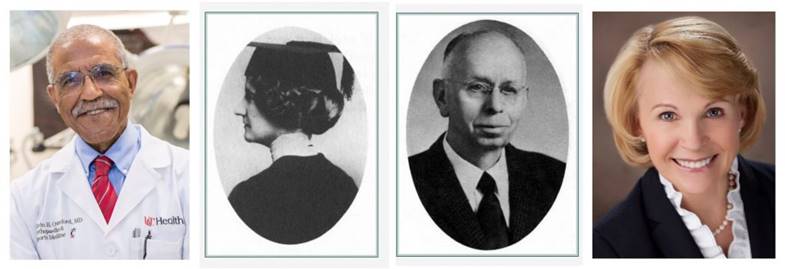
The MPOWER houses are named after notable UTHSC alumni and faculty. Pictured left to right are Alvin Crawford, MD, Sara Conyers York, MD, Lemuel W. Diggs, MD, and Rhea Seddon, MD. (Photos courtesy of Dr. Crawford, Dr. Seddon, and the UTHSC Health Sciences Library Historical Collections)
Each student becomes part of one of four MPOWER Houses, named in honor of distinguished UT Health Science Center alumni and faculty members whose accomplishments embody leadership, service, and excellence.
Crawford House (Groups 1-7)
Named for Alvin Crawford, MD, the first African American graduate of the UTHSC College of Medicine and a pioneering pediatric orthopedic surgeon.
Conyers-York House (Groups 8-14)
Named for Sara Conyers York, MD, the first woman to graduate from the UTHSC College of Medicine and a leader in medical education.
Diggs House (Groups 15-21)
Named for Lemuel W. Diggs, MD, whose groundbreaking work helped establish the nation's first comprehensive research center focused on sickle cell disease.
Seddon House (Groups 22-30)
Named for Rhea Seddon, MD, physician, astronaut, and one of NASA's first female astronauts, who became the first female surgeon in space.
A Community That Lasts Beyond Medical School
MPOWER is designed to create a supportive community where students can learn from mentors, connect with peers, and develop the relationships that will shape their professional journey.
Whether you're seeking career advice, wellness support, research guidance, or simply a sense of belonging, MPOWER provides opportunities to connect, engage, and thrive throughout medical school.
If you have questions about MPOWER or would like to connect to learn more about becoming a faculty mentor please contact com-sa@uthsc.edu.